of the world population projected to have myopia by 2050
A widely cited modelling study estimated about 4.76 billion people may be affected by 2050.
Read the global studyMYOPIA CONTROL IN KOLKATA
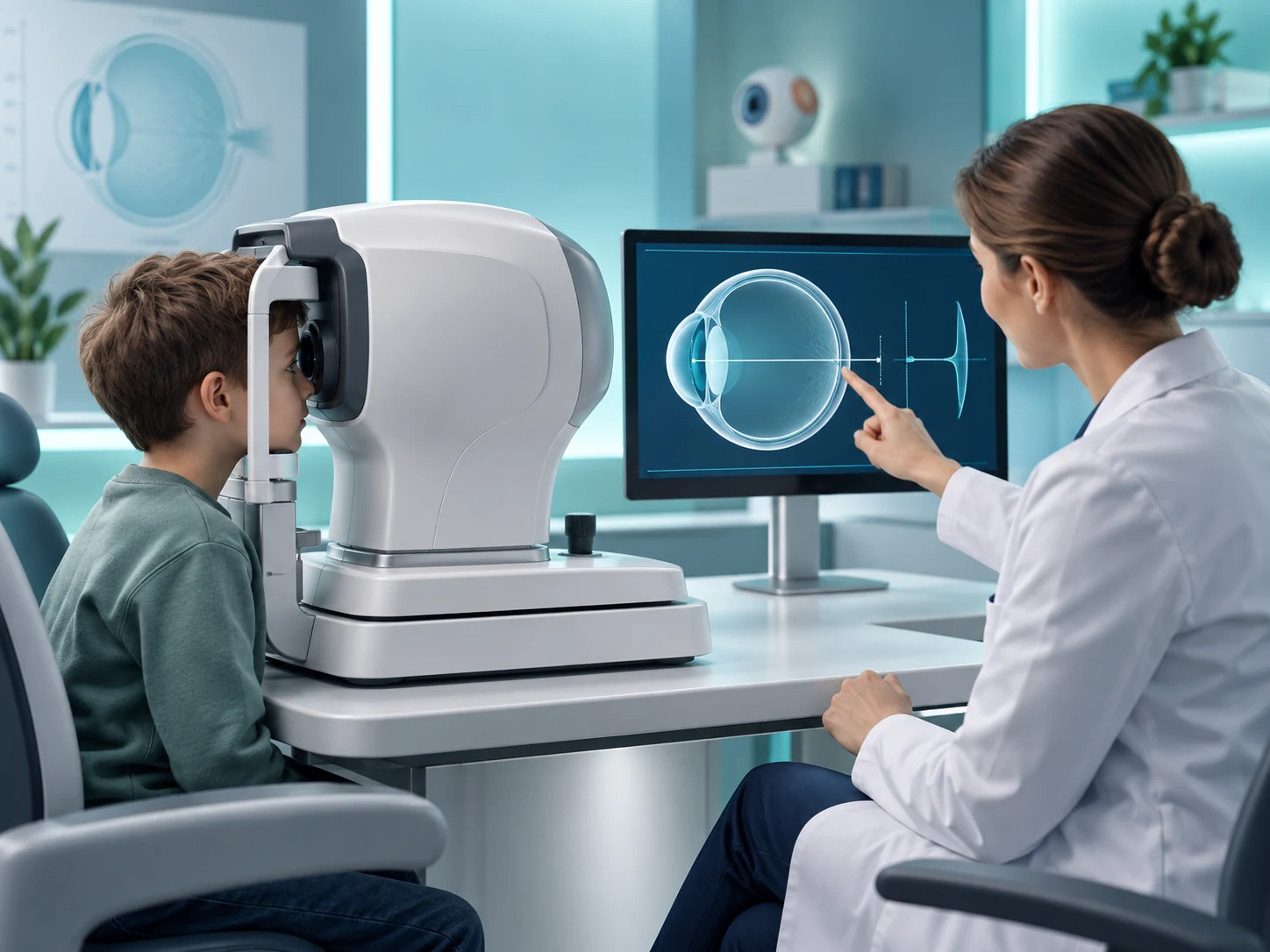
Myopia can change as a child grows. Early measurement and a personalised plan can help manage that change with clarity, care and realistic expectations.
Myopia-control treatments aim to slow progression; they cannot guarantee that it will stop. A full eye examination is required.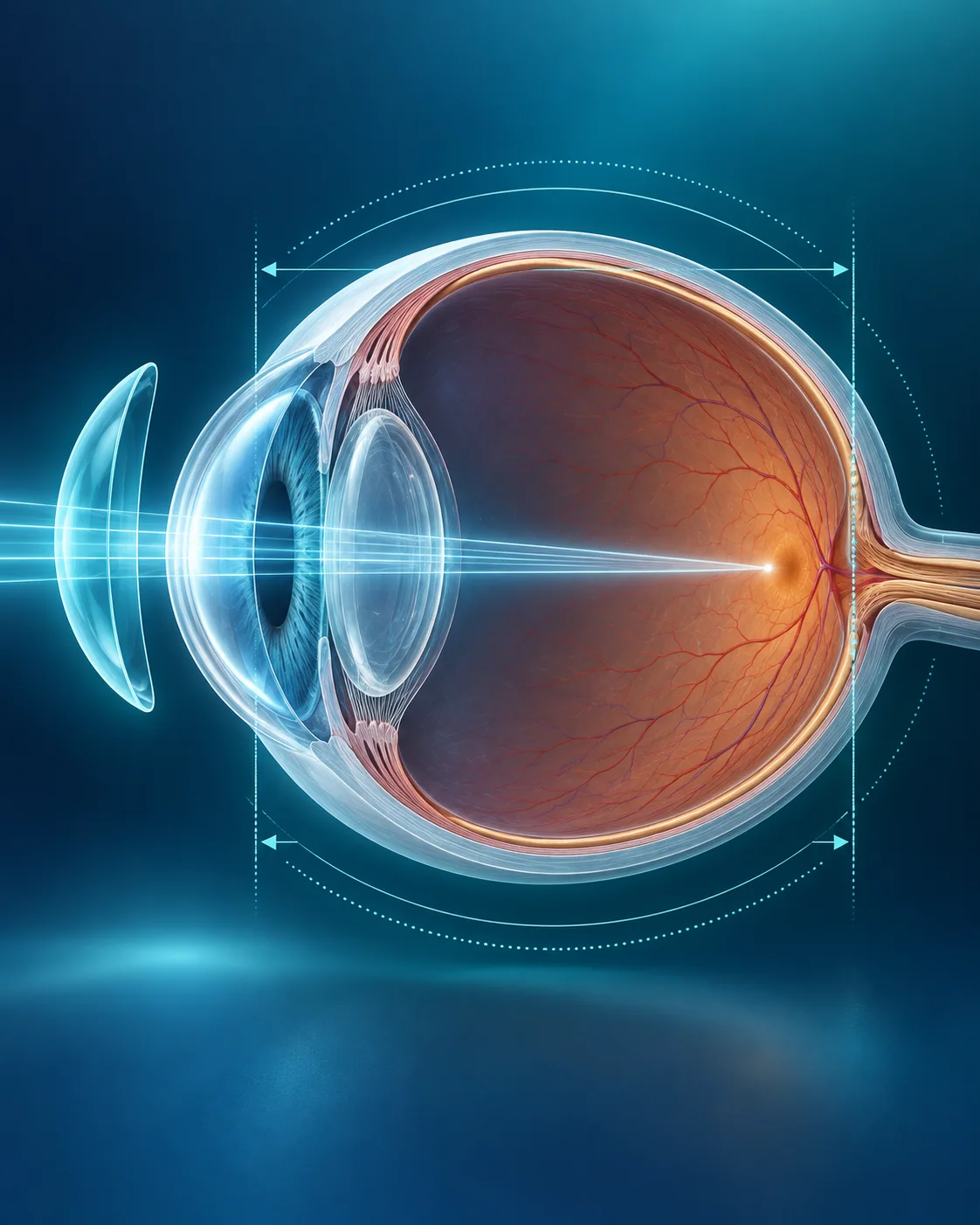
SHORT-SIGHTEDNESS, EXPLAINED SIMPLY
Myopia means near objects are usually clearer than things far away.
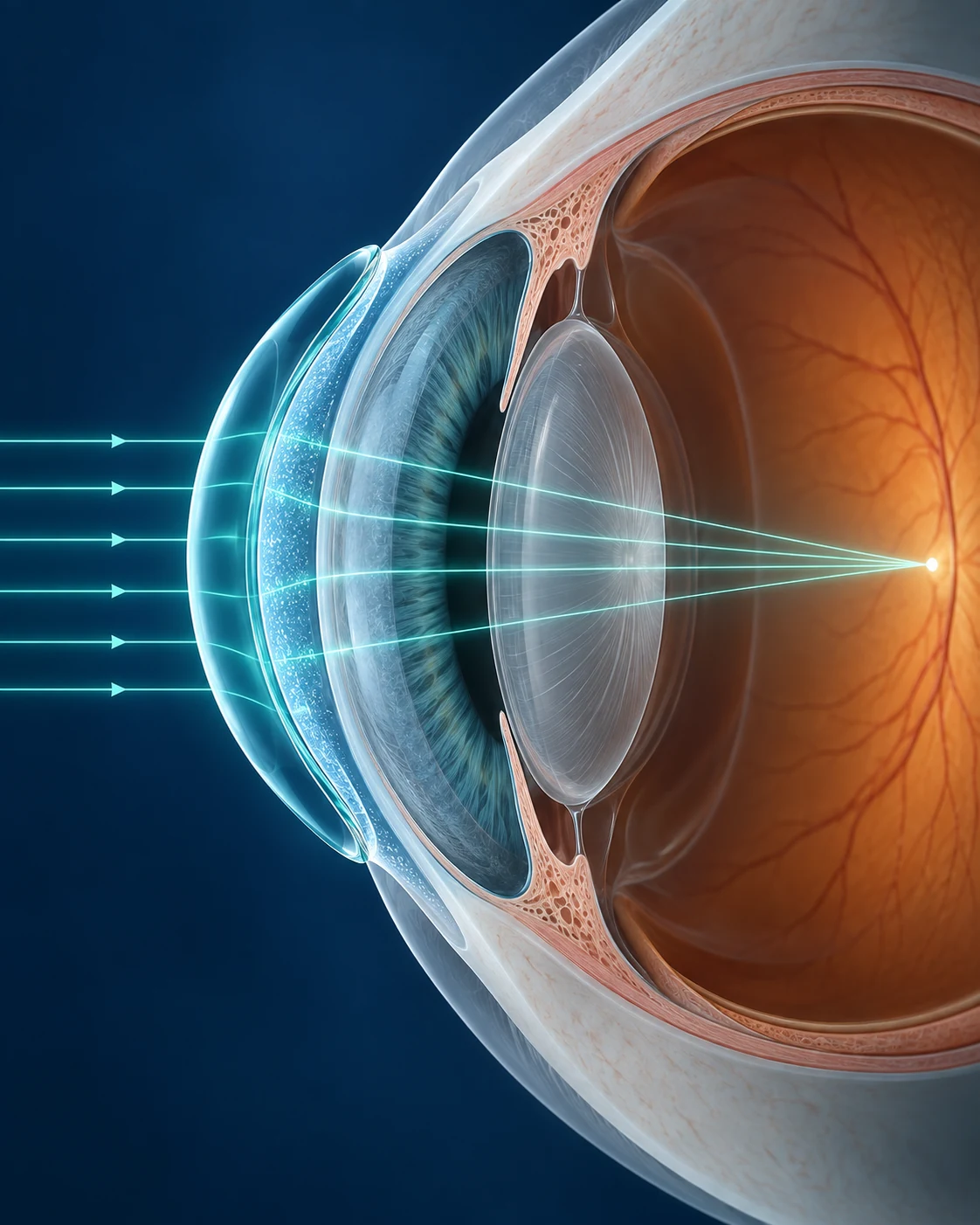
It happens when light focuses in front of the retina instead of directly on it. This is often because the eye has grown too long, although the cornea and lens inside the eye also influence focus.
Glasses or contact lenses can make vision clear. Myopia control has a different goal: to slow further eye growth and prescription change during childhood.
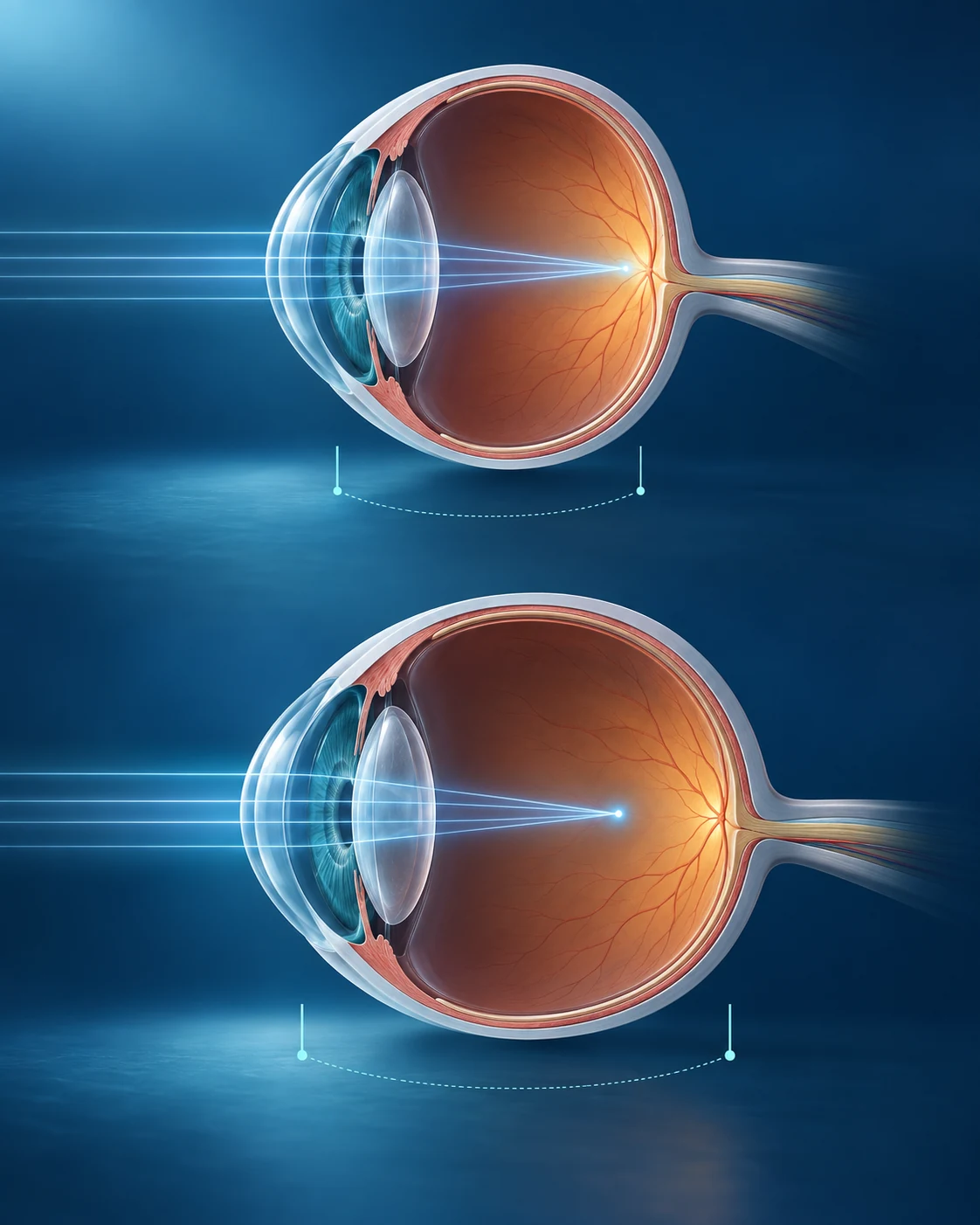 Educational illustration · not a diagnostic image
HOW MYOPIA PROGRESSES
Genes, age and the visual environment can all influence risk. Progression is often faster in younger children, but every child follows a different pattern.
During childhood, some eyes grow longer than expected from front to back.
Instead of meeting on the retina, light comes into focus in front of it. Distant objects then look blurred.
As the eye continues to grow, a stronger minus prescription may be needed. Regular measurements show the pace of change.
HOW COMMON IS MYOPIA?
These are population prevalence estimates—the percentage of people who have myopia. They are not an individual child’s yearly progression rate.
A widely cited modelling study estimated about 4.76 billion people may be affected by 2050.
Read the global studyA recent review combined 43 Indian studies published after 2018. Estimates vary with age, location and testing method.
Read the India review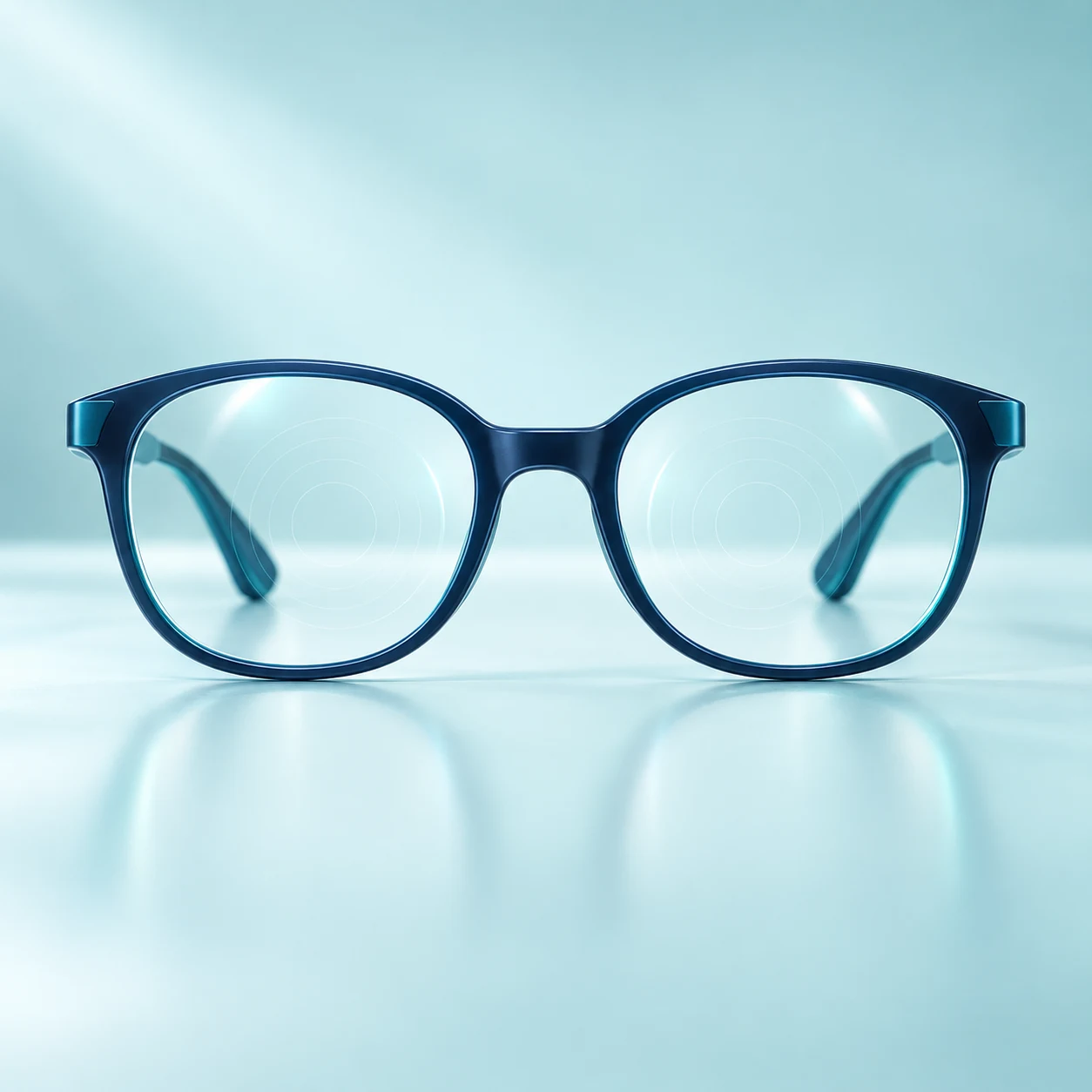
Special optical designs can correct distance vision while changing how light reaches the outer retina. They are worn during the day.
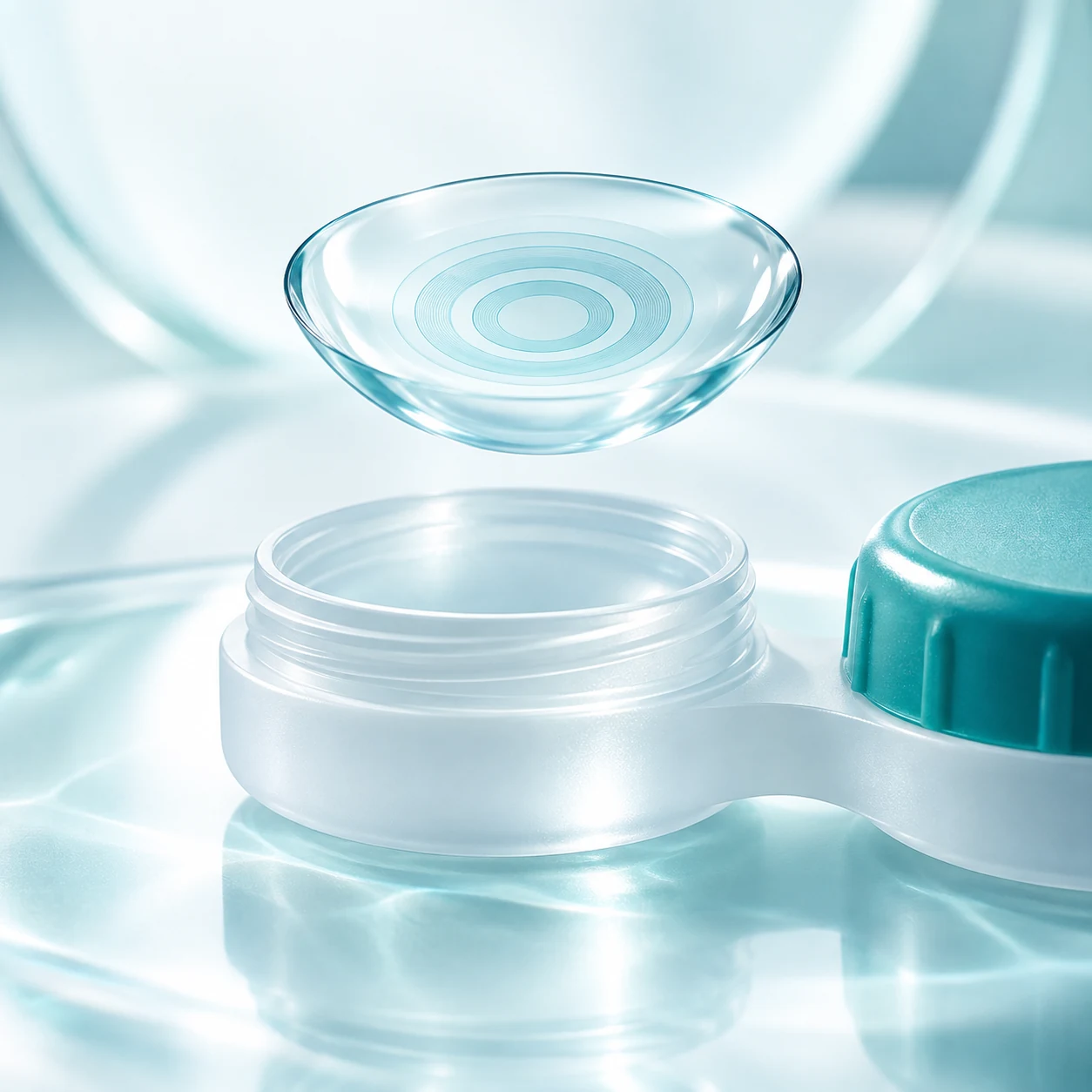
Dual-focus or multifocal designs may be considered for children who are suitable and can manage contact-lens care safely.
Custom rigid lenses are worn during sleep. They temporarily reshape the cornea and may slow eye growth while treatment continues.

An ophthalmologist may prescribe atropine eye drops after weighing the likely benefit, side effects and follow-up needs.

More outdoor time helps reduce the chance of myopia starting. Breaks from prolonged close work support comfortable visual habits.
Conceptual educational illustrationORTHO-K FOR MYOPIA PROGRESSION
Ortho-K lenses are custom rigid lenses worn during sleep. They temporarily reshape the cornea, which can provide clearer daytime vision without glasses while the effect is maintained.
Research in children shows that Ortho-K can reduce axial elongation compared with standard correction. It does not work equally for everyone, and it requires careful hygiene, adult support and regular clinical review.
WHY LENSWISE FOR MYOPIA CONTROL
Myopia control is an ongoing process. LensWise helps families understand the choices, follow the routine and track meaningful changes instead of relying on a single prescription number.
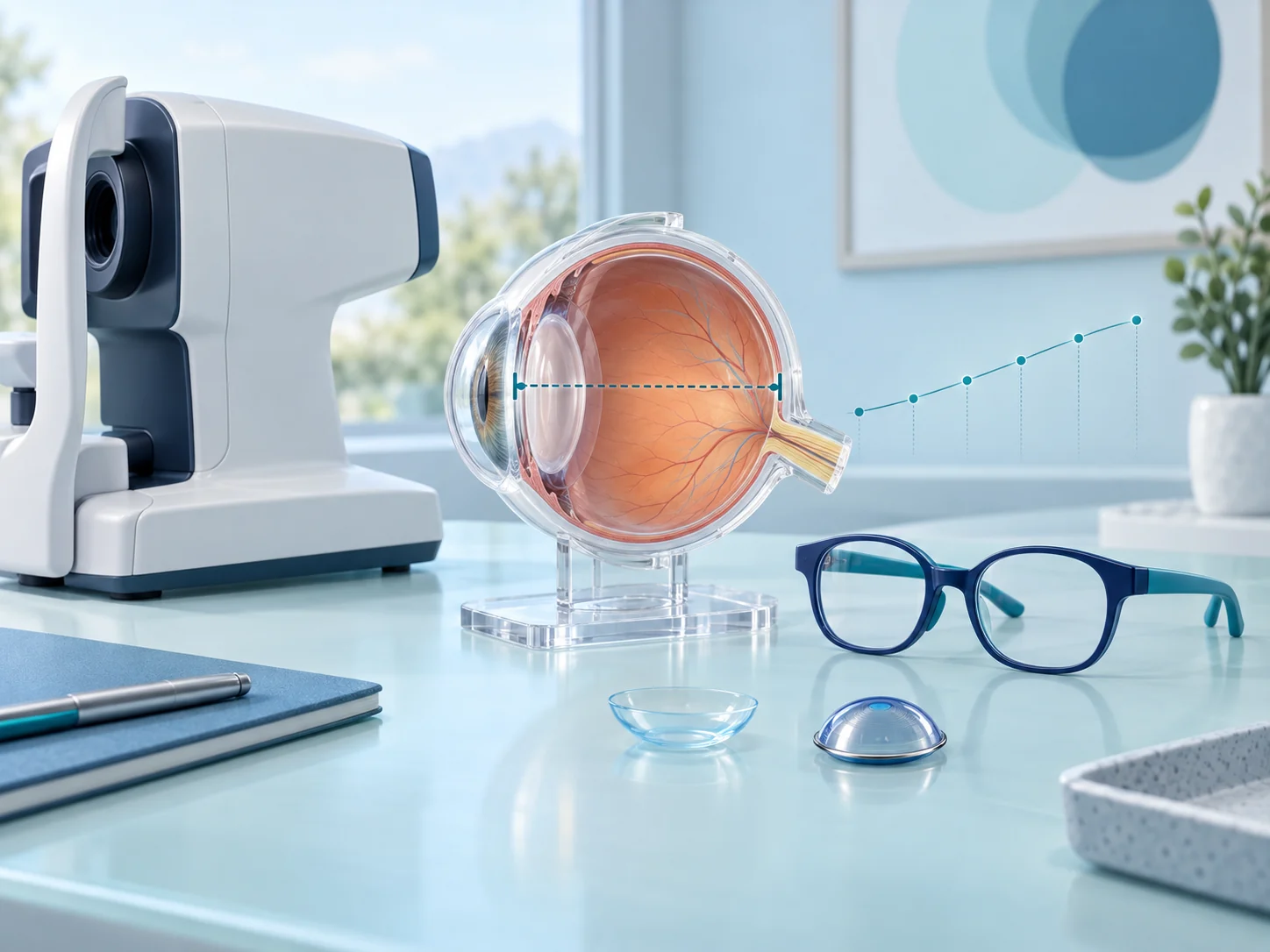
Vision, eye health and available growth measurements establish a clear point for future comparison.
Families can compare suitable spectacle, contact-lens and medical referral options with their routines in mind.
Instructions are kept simple, with practical training when a contact-lens option forms part of the plan.
Planned reviews track prescription, vision and eye health so the management plan can be reconsidered when needed.
QUESTIONS PARENTS OFTEN ASK
These answers are general education. Your child’s examination is what turns them into a safe, personal plan.
Myopia cannot usually be removed permanently during childhood. Glasses or lenses correct blur, while myopia-control treatments aim to slow further change. No option can guarantee that progression will stop.
The clearest answer comes from repeat examinations. Changes in prescription and, when available, axial-length measurements help your eye-care professional understand the trend.
Assessment should begin when myopia is detected or a child is considered at higher risk. The right timing depends on age, prescription, rate of change, eye health and family circumstances.
It may be suitable for some children who can follow careful hygiene with adult support. Overnight contact-lens wear carries an infection risk, so correct cleaning, regular reviews and urgent attention to pain, redness or light sensitivity are essential.
Many suitable wearers achieve useful daytime vision without glasses while the overnight effect is maintained. Results vary, and backup glasses may still be needed.
There is no single best option for every child. A plan should consider age, prescription, progression, corneal shape, lifestyle, comfort, safety and the family’s ability to follow treatment.
MYOPIA CONTROL CONSULTATIONS IN KOLKATA
Begin with a detailed assessment, a discussion of progression risk and a plan your child and family can follow confidently.
220, Madurdaha, Hussainpur, Kolkata, West Bengal 700107, India · Monday to Saturday · 9:00 AM–5:00 PM